

BCM Resources (B.V): A Potential Tier 1 Discovery in Utah, USA
This article is laying out my current views on BCM Resources. It will include a lots of speculation, forward looking statements and personal opinions. I have a fairly large position in BCM so consider me biased. I could be wrong on everything. Basically treat this article as for “entertainment purposes” and do your own Due Diligence. I am rushing this article out so there might be some formatting errors and it might be a bit erratic but I want to get it out now and its not going to be perfect. This IS NOT INVESTING ADVICE!!!
Abstract
BCM Resources just announced their most exciting hole yet (hole TK20) which looks to have tagged into parts of a large, complex, molybdenum rich zone of a potential copper/molybdenum porphyry system in Utah, USA:
“To date, TK20 has delivered the longest mineralized intercept in the Thompson Knolls project. TK20 Discovery Drill Hole intercepted continuous mineralization over 1,806 ft (>550 m) with significant molybdenum-copper and copper-molybdenum intervals”
Not only that but the company has already encountered copper rich skarn mineralization across considerable strike so there is potential for both a large porphyry deposit(s) along with a large skarn deposit (Like a Bingham Canyon model for example). Furthermore a recent hole (hole TK18) encountered an uplifted, relatively shallow, oxidized porphyry body over a kilometer away from where hole TK20 just went into a porphyry body, and the company believes there is potential for a supergene enriched, chalcocite blanket form of copper deposit as well. If that was not enough the company now believes that there is probably multiple porphyry centers in the area:
“TK20 QMP intrusives and mineralized skarns represent one of the multiple porphyry centers at the Thompson Knolls project”
So what makes BCM Resources exciting right now?
- Has just discovered a molybdenum rich, potassic core of a Porphyry body with >550 m of mineralization (assays tbd)
- Has expanded the footprint of the distal Skarn discovery by up to almost a kilometer in strike (assays tbd)
- Limited previous drilling hit up to 155.4 m at 0.66% Cu, 0.12 g/t Au and 7.4 g/t Ag. Including 21.3 m at 1.25% Cu in Distal Skarn
- Has encountered an oxidized Porphyry 1 km away which might have formed a chalcocite (high grade copper) blanket
- Now believes there must be multiple porphyry centers in the area
- [Rio Tinto], who has been in BCM Resource’s data room, staked ground surrounding BCM’s TK project last year, and this year they started drilling near the border of BCM’s claim boundary:
- June 1: “Our neighbor on the south-western corner of the property, Kennecott Exploration, a subsidiary of the 2nd-largest global miner, Rio Tinto, has started setting up three drill pads on the southern extension from TK“
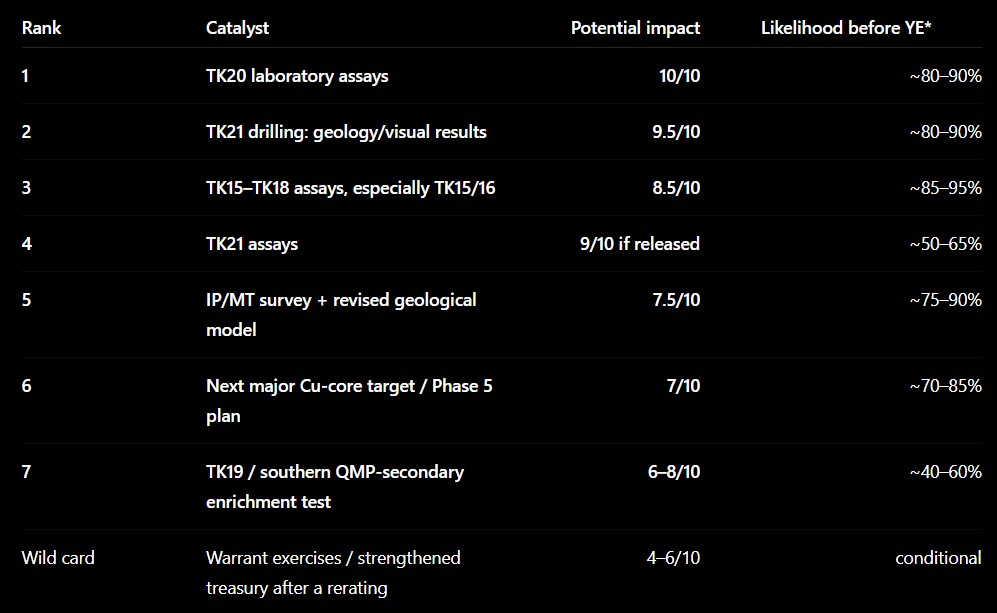
Potential Catalysts Before Year End
(ChatGPT rankings)
My Case: Risk/Reward
#1 Potential
First of all there are no guarantees in any investment. Especially not in High Risk/High Reward exploration stories. With that said I see a very interesting Risk/Reward setup in BCM Resources right now. When it comes to potential upside I think this has some of the highest you will ever come across in a junior exploration story. The reasoning is quite straightforward. Sergei Diakov who is a true elephant hunter and was heading the BHP exploration team that discovered one of the largest, if not the largest, porphyry system in the world in the form of Oyu Tolgoi. There is a reason he has spent years working on Thompson Knoll. And that appears to be bearing fruit since BCM appears to have hit an incredibly strong and complex, molybdenum rich potassic porphyry core which suggests a very strong mothership. To quote Claude (AI):
“It demands a large, deep, repeatedly recharged magma chamber bleeding volatiles for a geologically long time”.
This comes after having intercepted significant copper mineralization over significant widths in a Distal Skarn zone. Add the fact that the BCM team now believes there ought to be multiple porphyry centers around Thompson Knoll and that they hit an oxidized porphyry 1 km away from Hole TK20 which might have led to the formation of a chalcocite blanket somewhere in that area. Furthermore I would add Rio Tinto’s staking last year and their recent drill pad construction several kilometers on trend from BCM’s most interesting drill holes and a pretty incredible picture in terms of size is starting to come into view. Lastly, there are even more outlined porphyry targets in the Thompson Knoll project which one ought to increase the implied value of given the A) Confirmation of a mineralized porphyry system, B) The apparent strength of the molybdenum core, and C) What the latter suggests about the strength of the mothership which would be a batholith underlying the other targets as well.
“I think as this thing unfolds, without question we have something absolutely enormous here. How big, we don’t know yet. But in every sense of the way, geologically, the intensity of the potassic alteration, the intensity of stockwork veining, the degree of molybdenum mineralization that we’re seeing is unprecedented in my experience in porphyry exploration.
So, I think those are all tell-tale signs that we’re going to see a big, big system here.”
Lastly I would add that if Rio Tinto is successful in finding whatever they are targeting near the apparent edge of Anomaly 2, which is along strike from BCM’s recent drill holes, then they might end up discovering something that continues into BCM’s land package in the southern part of BCM’s claim block… That might be worth something too.
#2 Risk
Again the risk is always that there will not be anything of significance discovered by a junior that could back up the Market Cap and then some. Given the depth which BCM is drilling they need to find something meaningful that would be worth the capex to develop. A small low grade deposit simply won’t work. If they only find that its a no go and I’d expect to lose money. They need to find something that will be worth at least C$100 M to someone (like Rio Tinto) from these levels or we will lose money on Thompson Knolls. I think Rio Tinto would pay BCM C$100 M for Thompson Knoll in a heart beat today if they could. But yeah, of course there are risks like the grades and tons simply don’t materialize for whatever reason even when combining some of the deposits. Maybe the copper rich parts of the current main target porphyry are simply not there due to erosion, faulting or them for some reason never being created and the moly core disappoints etc. I’m just throwing it out there since this is exploration and mother earth can be a you know what.
#3 Risk/Reward
What I like about cases with very large Blue Sky Potential is that I don’t need those kind of cases to be successful very often for the few winners to pay for a lot of losers. Basically the larger the upside potential the more often I can afford a bet to not play out as I hoped. In the case of BCM I think the raw, theoretical upside is enormous in dollar terms. There is a chance they make anything from a significant discovery to a true Tier 1 discovery which could include huge porphyry(s) tonnages at good grade, a very large skarn deposit(s), a chalcocite blanket and then there is even potential for other porphyries and porphyry related deposits in other parts of the project (like where Rio Tinto is drilling). If BCM would end up making a true Tier 1 discovery in a flat, uninhabited part of Utah next to Highway i-50, at a time when copper is at all time highs and the US government is raving about mining copper then I don’t even want to speculate what the price tag in a take over could be. Except that it would probably be in the many billions of dollars. This is something no one has seen in a long time so its not easy to give reference points but Arizona Sonoran recently sold for around $2 B and that was not a Tier 1 project but it was a good, advanced copper project in the US. Filo sold for $4.3 B when copper was trading at $4/lb and their true tier 1 deposits sits at 5,000 m elevation, in an extremely remote part of a mountain range, that is split between Argentina and Chile.
My simple view why I really like the Risk/Reward in BCM Resources even after it has run to ~C$100 M is that I believe there is a pretty good chance that they will prove to have something worth more than that given the apparent success after just having drilled some 20 holes. Then I think there is a decent chance that they will end up finding something absolutely massive in the form of a combination of porphyry(s), skarn and even a chalcocite blanket which could end up being worth several billions of dollars over the coming years. I have bought more shares all the way up to 0.42 at the time of writing.
What I also like is that I think it is going to be very hard to “kill” the story anytime soon unless TK20 assays are like really really bad. If TK20 and maybe some of the other holes are at least good-to-decent then that would de-risk a substantial volume of rock and the game would be in the first innings still. Also note that BCM is certainly not a household name among newsletters, retail or anyone for that matter. It has not been the talk of the town and was pretty much given up for dead just a few weeks ago. Basically I am saying that I think there is a very large number of money on the sidelines which means potential first time buyers. Furthermore the stock appears to be held by a large portion of strong hands as we have seen some pretty big moves without an insane volume of shares having traded hands. Also, the dips have been relatively shallow and the stock has closed near the highs of the day each day since the hole TK20 update. That makes me believe there are currently more people trying to get or add to a position than there are people willing to give up ownership. Lastly I think there are quite a number of people who are hoping that BCM does a financing shortly in order to be able to get in at bulk. Now what might really make the lives tough for any accumulators or wannabe placement buyers is if BCM makes people exercise the $0.30/share warrants which could bring in >C$10 M and they just keep drilling. Then anyone who would like to be in the stock, but has not gotten in yet, would all of a sudden risk seeing BCM potentially make that highlight reel discovery hole without having the chance to get position in a placement.
Expectations
I think BCM will keep climbing towards C$300 M MCAP either up until assays or with decent-to-good assays from the outstanding holes which would show that the potential is real despite not being barn burner holes. I’m thinking some good skarn hits in TK15 for example which suggests there might be a pretty big skarn deposit alone. Also TK20 running lets say 450 m at 0.5%-0.6% CuEq (carried by moly) on average which I think is doable. Given how TK20 is the only hole to have hit parts of a porphyry near TK8 I think the market will realize that whatever it hits it is probably not a case of where they literally hit the best part of it on the first try. If TK20 comes in with materially better assays than that then I think all hell could break lose. Especially if hole TK21 is out with encouraging visuals and not super discouraging visuals around that time because then there could really be some serious inferred tonnages. If/when the market gets convinced that this is a great or even a world class Tier 1 quality system that happens to be in maybe the best location ever in Utah, US then I think the stock will take on a life of its own and I have no idea what will happen.
Note: Again I will point out that one should still consider this to be a High Risk/High Reward story where anything can happen. If I knew I were going to make a boatload of money in BCM I would be all in. I don’t know that and I am not all in. I simply have a quite large position, especially for an early stage explorer, simply because I think the Reward side of the equation is very attractive compared to the Risk side of the equation. With all that said I might very well end up losing money on BCM and I know that!
Thompson Knoll (“TK”) Project Setting
BCM’s Thompson Knoll project has quite a few things going for it in terms of the potential for a premium price tag in case of significant success…
- Jurisdiction: Tier 1
- Utah, USA
- Location: Tier 1
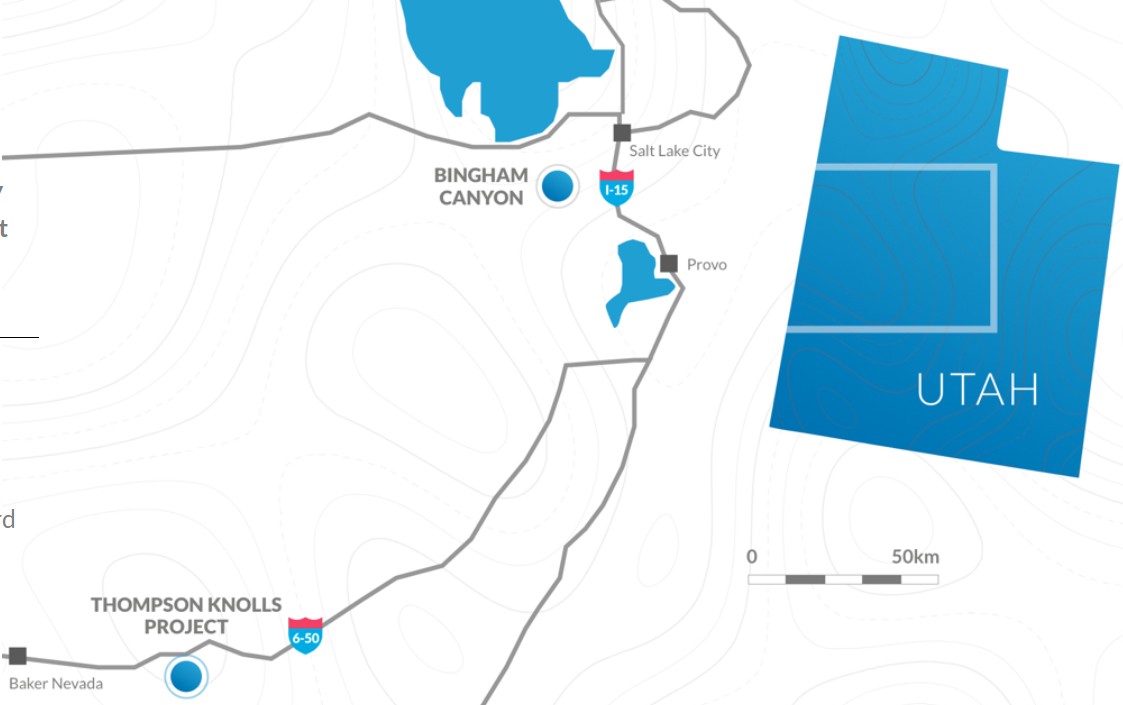
- Empty, arid, flat ground in Utah next to Highway i-50
- Infrastructure: Tier 1
- Next to Highway i-50 going from Ely to Delta
- Permitting: Tier 1
- Exceptional: Utah ranks high (#6 globally) in policy perception, no indigenous people, people or buildings
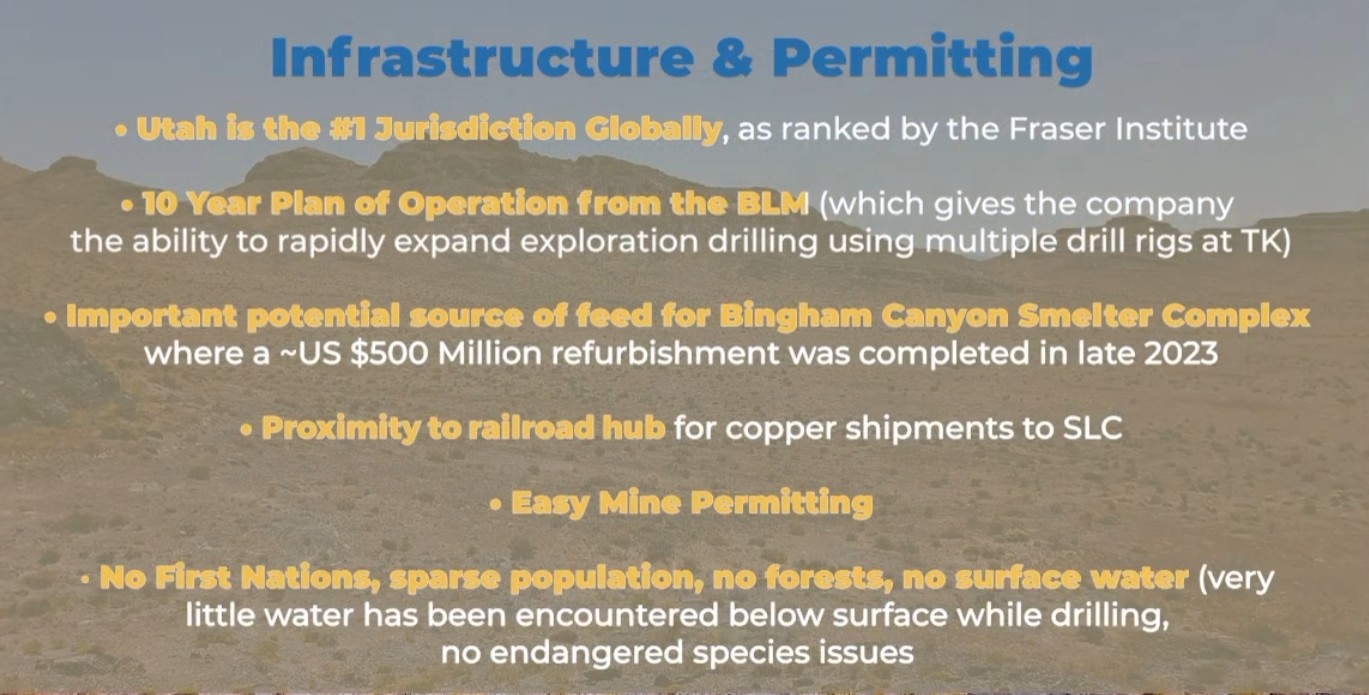
… The Thompson Knolls project is basically the dream location to find a Tier 1 porphyry system in today. Any success in a place like this is expected to come with some of the highest premiums in the space.
- Exploration Team: Tier 1
- Dr. Sergei Diakov: Led BHP’s discovery team of Oyu Tolgoi & AngloGold Ashanti’s discovery team of Nuevo Chaquiro
- John P. Schloderer: Worked at Escondida and Reko Diq etc
- Rick Redfern: Over 30 years of experience exploring for gold and copper for ABX and Homestake with Au and porphyry-type projects
- Octavio Urbina: Over 20 years of mineral exploration experience exploring for Cu and Cu-Au porphyries in Central Andes, IOCGs, precious metals epithermal system in Central and Southern Andes, and Deseado Massif in Argentina.
Political Tailwinds

Currently Known Thompson Knolls (“TK”) Targets
- Main TK Skarn
- TK6, TK8, TK15, TK17 etc
- Main TK Porphyry(s)
- Around TK20
- TK Chalcocite Blanket
- Around TK18 which encountered oxidized porphyry
- Potential Porphyry(s) near TK18
- Unweathered porphyry?
- South-western trend
- Near where Rio Tinto is drilling and along strike from TK18
- Southern Porphyry Target aka “Discovery Knoll”
- Near where Rio Tinto is drilling
Now lets go through some of them…
Skarn
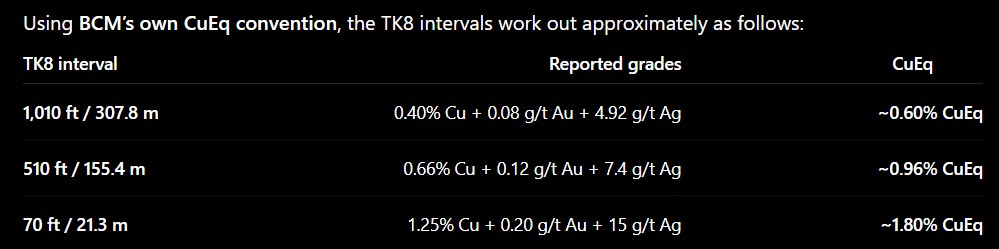
Before TK20 apparently found a molybdenum rich, potassic core of a porphyry the most exciting hits had been into parts of Distal Skarn zones. TK8 has already delivered a substantial assayed Cu-bearing skarn intercept: BCM reports 155.4 m at 0.66% Cu, 0.12 g/t Au and 7.4 g/t Ag. Including 21.3 m at 1.25% Cu.
TK6 returned 75.5 m at 0.41% Cu, 0.06 g/t Au and 5.7 g/t Ag, including 13.1 m at 0.78% Cu.
… TK6 and TK8 were collared approximately 400-425 m apart if I’m not mistaken FWIW.
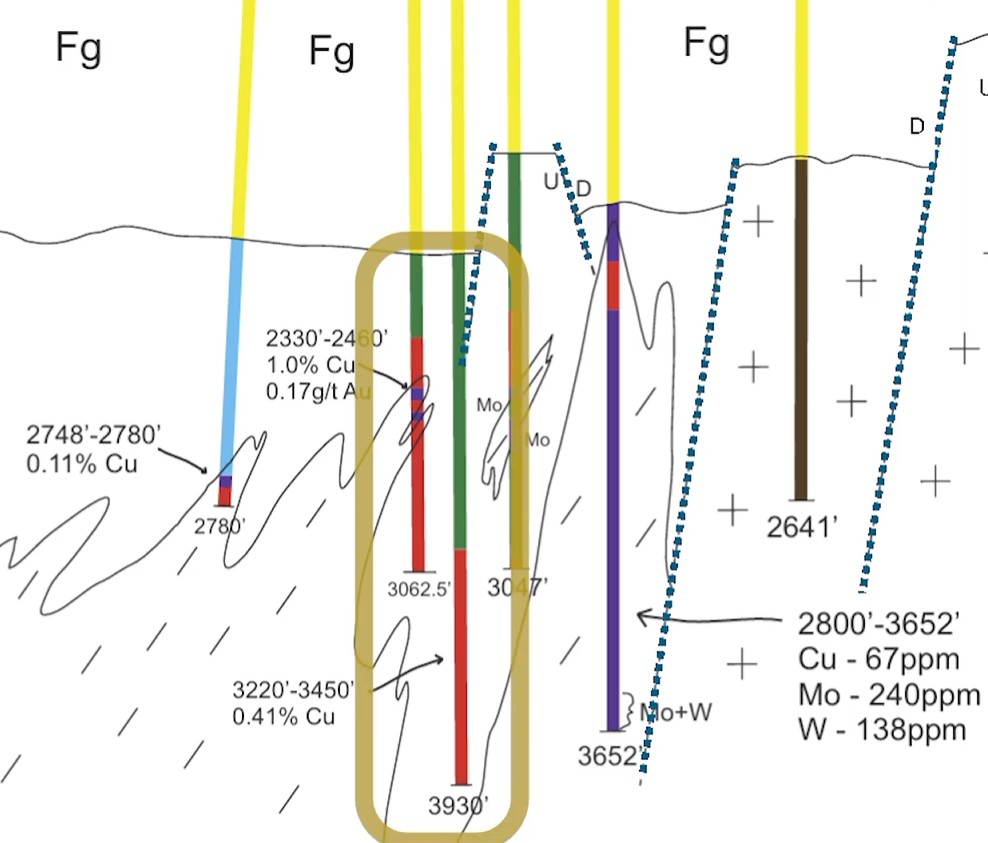
The 2026 drilling then materially increased the possible footprint. TK15, 250 m southwest of TK8, encountered skarn from roughly 595 m to 1,189 m depth with multiple magnetite-pyrite-chalcopyrite zones; locally BCM estimates up to 20% sulfides and up to 5% chalcopyrite, although these are visual estimates rather than assays. TK16, another 250 m southwest, again encountered extensive skarn from 621 m to 1,156 m with multiple sulfide-bearing intervals and locally dense pyrite-pyrrhotite-chalcopyrite breccias.
“What is the distance between the holes that have encountered decently mineralized skarns or better?”
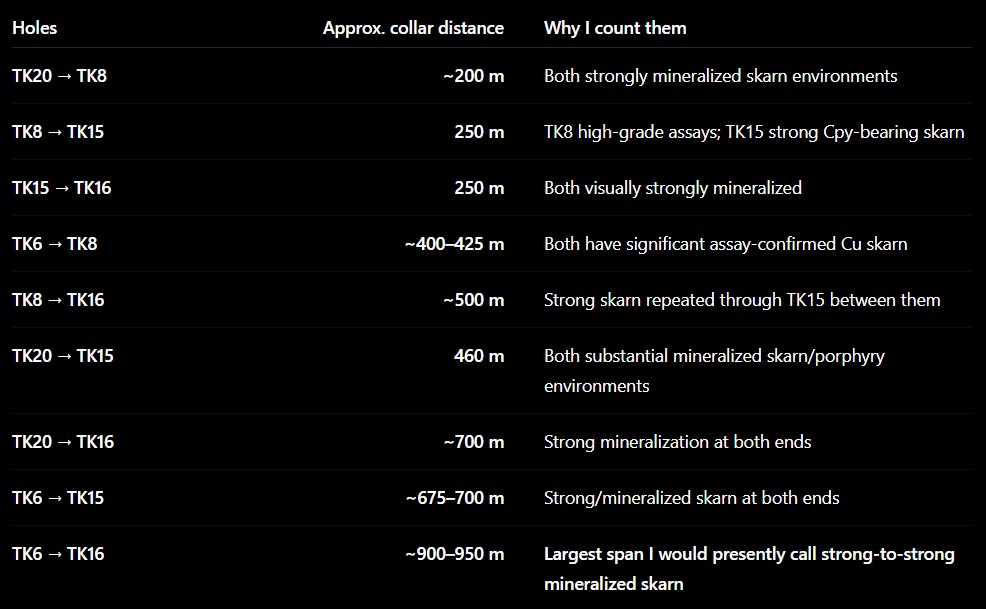
I asked ChatGPT to “Annotate each drill hole collar on this drilling map from BCM which has either encountered decently mineralized skarn or at least encountered meaningful intervals of magnetic skarn in the new drill holes which are yet to be assayed”
(ChatGPT rendered slide)
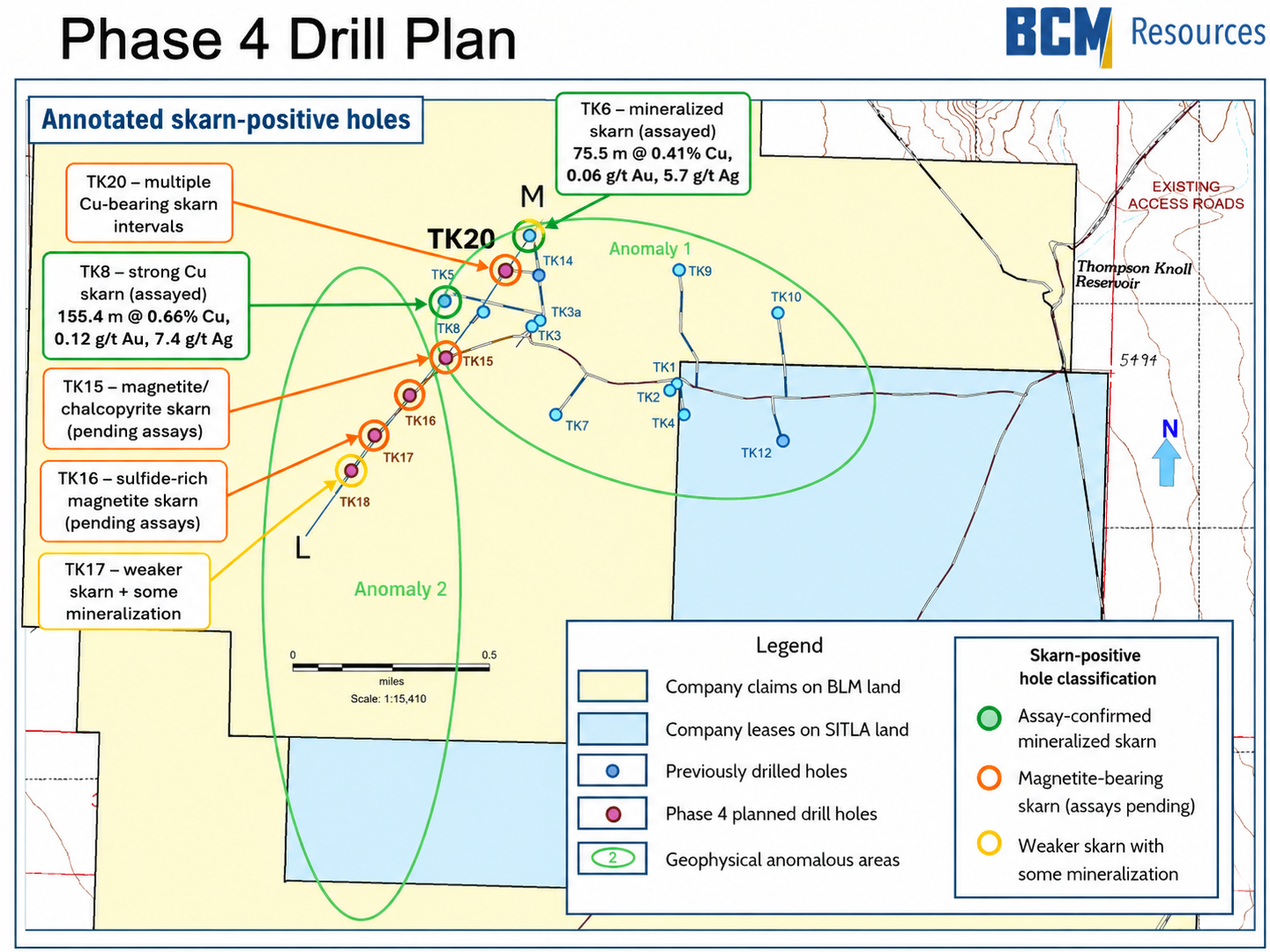
Then I asked ChatGPT “what is the distance between hole TK6 and TK16?”
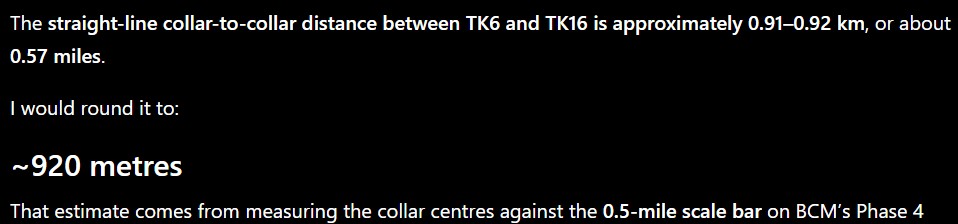
So BCM has encountered encouraging skarn mineralization, either confirmed through actual assay results or visually in the case of TK16, over a strike length of almost 1 km already. And TK8 has proven that there is skarn mineralization present that achieve highly encouraging grades:
Time will tell what the recent holes that encountered skarn will have in terms of assay results but some of the pictures in the recent update deck showed some skarn mineralization looking very much like some intervals in TK8. For example skarn intervals in TK20 which I put side to side with some skarn intervals from TK8:
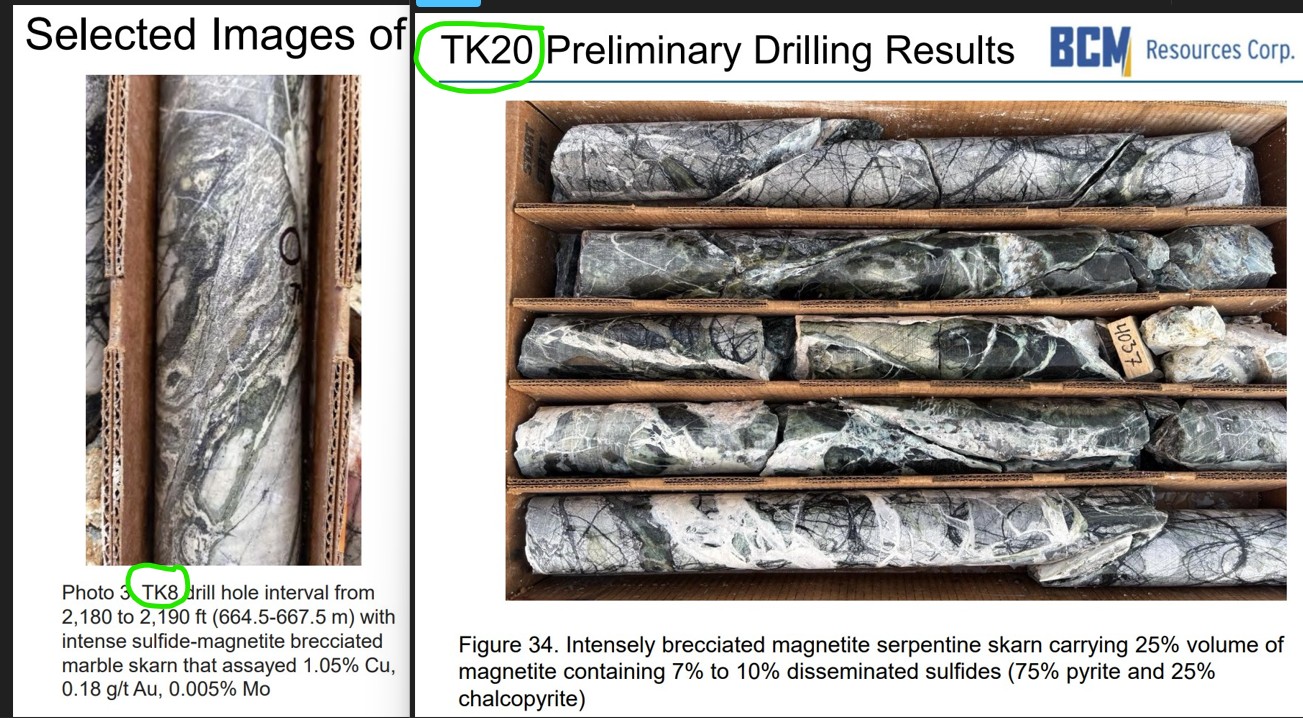
… Note that these are selected snapshots of just parts of the core in either hole and that TK20 had shorter, sporadic skarn intervals while TK8 had long, coherent skarn mineralization.
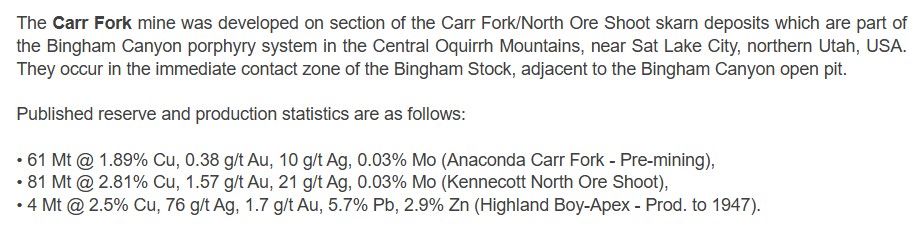
The presence of skarn and the overall skarn potential at TK is very encouraging in my book and it makes the porphyry system(s) start to rhyme with the grand daddy of porphyry deposits in this part of the US which of course is Bingham Canyon. Not only did Bingham canyon have monster sized porphyry but it was also able to produce world class skarn deposits:
The very limited drilling so far at TK has not been able to produce long intercepts of say >2% Cu mineralization but the theory is that both TK8 and TK6, which showed significant grades over significant widths, were intercepting distal skarn mineralization:
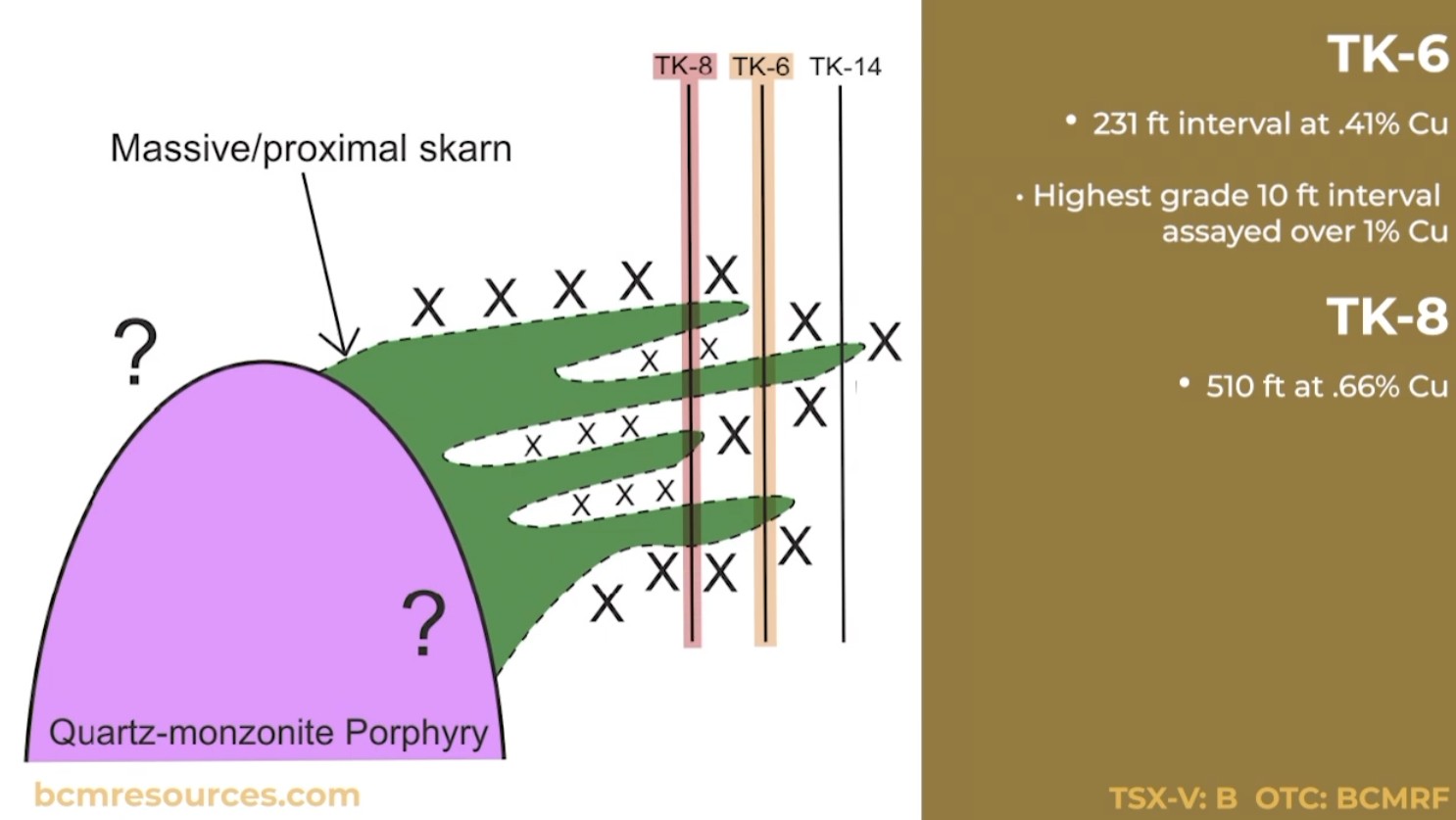
… In other words there might be a significant skarn endowment present in the northern part of the project and there is a legitimate chance that BCM ends up finding massive/proximal skarn as well which could be more impressive than TK8 and TK6.
Main Porphyry Target
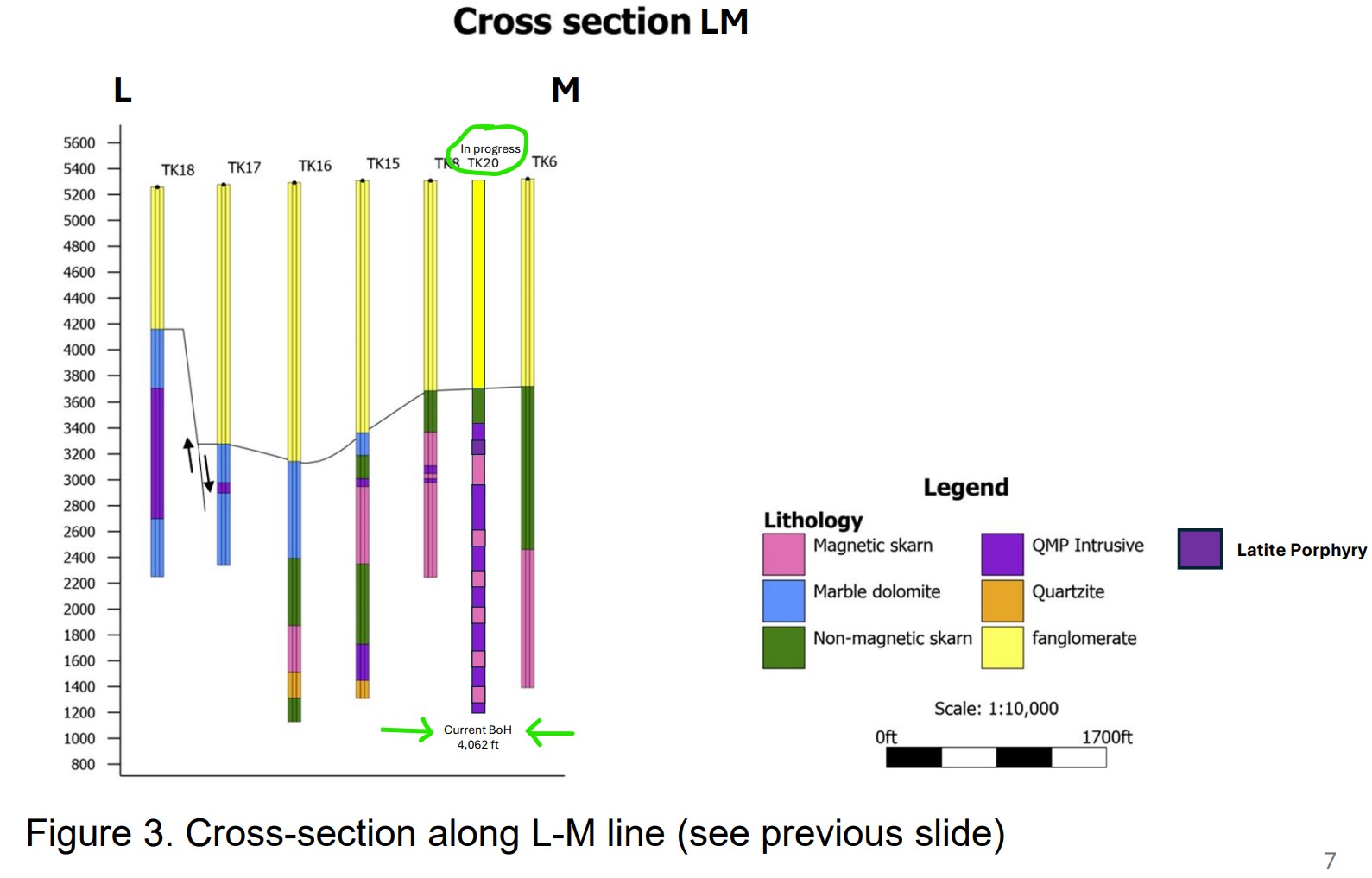
The most exciting part of the most recent update was that TK20 has now penetrated over 550 m of continuously mineralized porphyry/skarn, including strongly potassically altered QMP, intense quartz-molybdenite mineralization, repeated skarn intervals and chalcopyrite-bearing mineralization. At the time of the writing of the news release hole TK20 was still in mineralization so at the end of the day the mineralized interval could well surpass 550 m to boot:
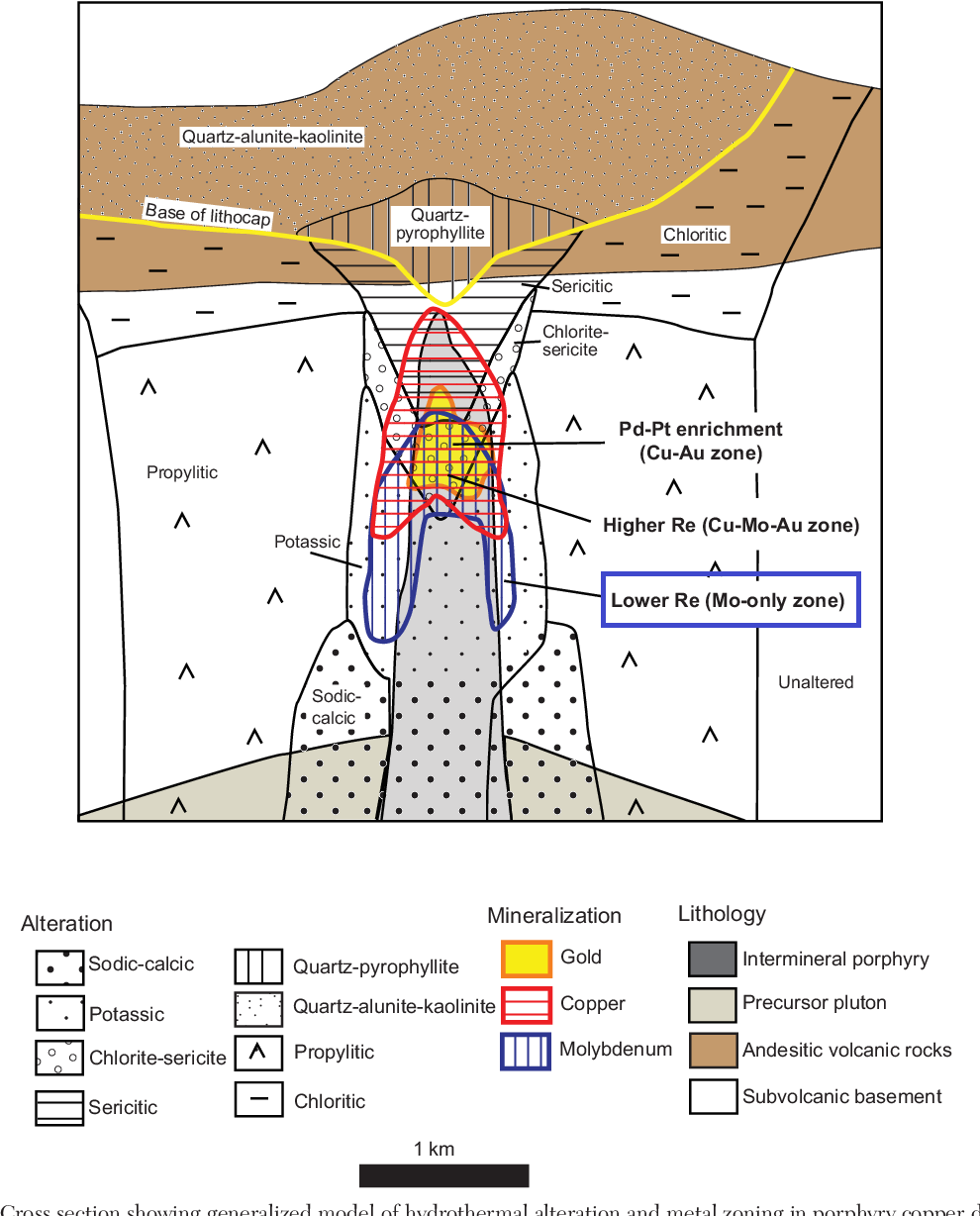
The current belief seems to be that hole TK20 went into the Molybdenum rich core of the porphyry system:
This is how Quinton describes it in his interview with Miles of AheadofTheHerd:
“Without question, this hole number 20 appears to be a major hole. I dare say a discovery hole. What does it mean? Well, moly is usually in the core of a porphyry copper system. The highest-grade molly is usually in the highest temperature core of the system. I think we’ve actually drilled straight into the core of this darn thing.”
… Hole TK21 which is expected to be drilled next, will hopefully intercept the theorized copper rich zones, of a copper-moly porphyry.
What a Molybdenum rich potassic core in TK20 suggests about the system
As of the most recent update BCM mentions that they now are looking for copper rich cores in plural….
I asked Claude what the findings in TK20 might mean for the overall “district” potential at Thompson Knolls:
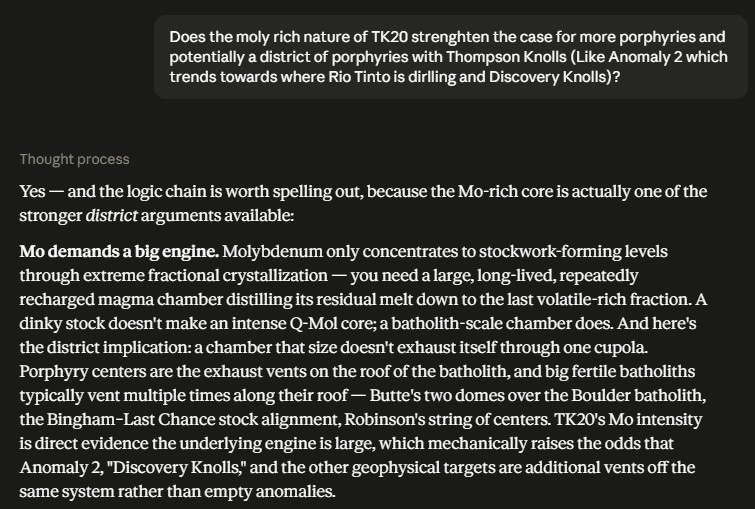
… Claude argues that the Moly rich core and intense stockwork is suggesting a large and active “mothership” to the porphyries at depth which would lead to multiple pulses. This is what you want in order to form impressive deposits. It also argues that this finding increases the odds that the other target areas within the greater Thompson Knolls project might indeed be explained by and host porphyries.
This rhymes with Quinton’s comments in the interview with Miles:
“I think as this thing unfolds, without question we have something absolutely enormous here. How big, we don’t know yet. But in every sense of the way, geologically, the intensity of the potassic alteration, the intensity of stockwork veining, the degree of molybdenum mineralization that we’re seeing is unprecedented in my experience in porphyry exploration.”
Tio Tinto validation
Claude adds this comment as it pertains to Rio Tinto setting up drill pads a few kilometers along trend which I think seems logical:
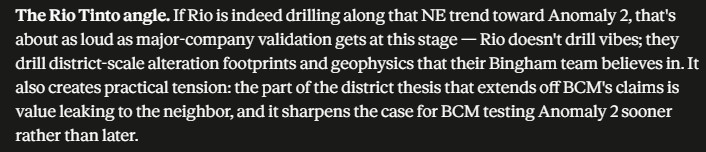
Rio Tinto had access to all data before the recent drill holes and decided to stake around TK. Both the immediate potential porphyry trend and potentially areas for infrastructure/water reasons in preparation for potential future development scenarios.
Chalcocite Blanket
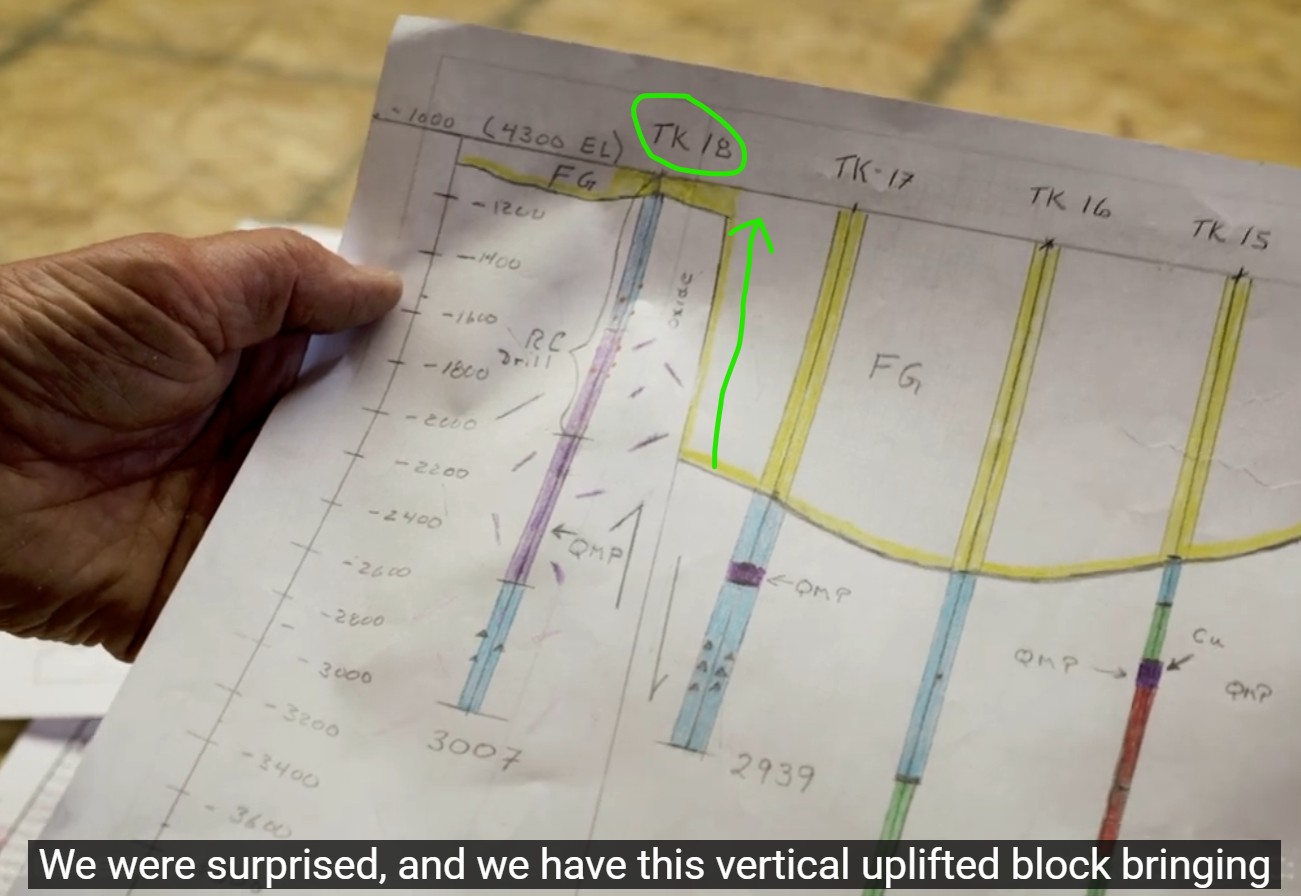
When BCM started drilling holes to the South-West from TK8 they encountered skarn in most holes but at hole TK18 they got a surprise since apparently that part of the bedrock had been uplifted with a surprisingly low thickness of cover rock as a result:
Quote from the video update:
“We were surprised and we have this vertical uplifted block bringing porphyry up to the surface. Bringing it up into the oxidized zone. And when we have mineralization in that oxidized zone it gets leached. That leaching can leach out the copper and deposit it at a lower elevation in terms of what is called a chalcocite blanket… Which will also be very responsive to any geophysical techniques we’re planning on…“:
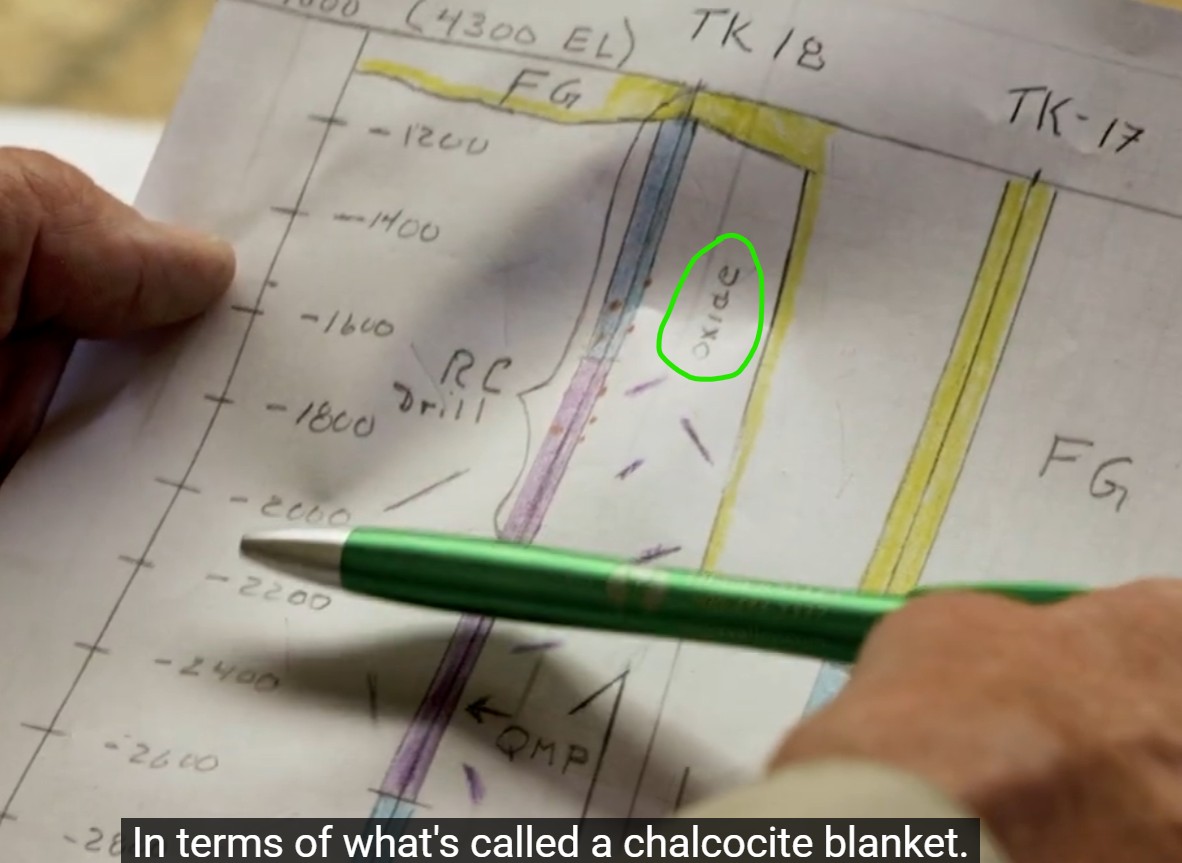
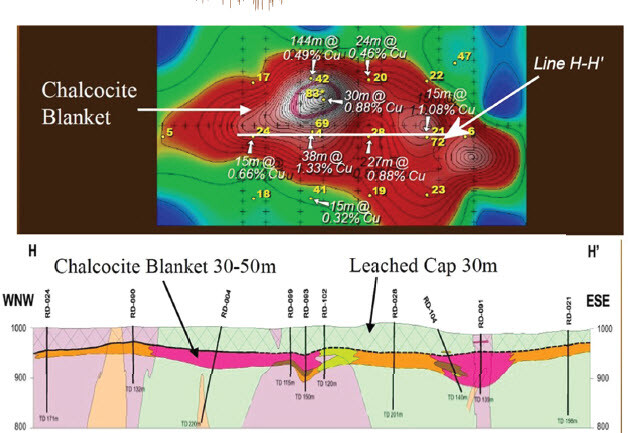
These types of supergene enriched, chalcocite (copper) blankets can be incredibly valuable as they potentially have much higher grades than the original porphyry and in this case it might be relatively near surface to boot.
Below is an example of how a chalcocite blanket could manifest:
And this is a conceptional slide from Dr. Sillitoe also showing that grades can get much higher than seen in the slide above:
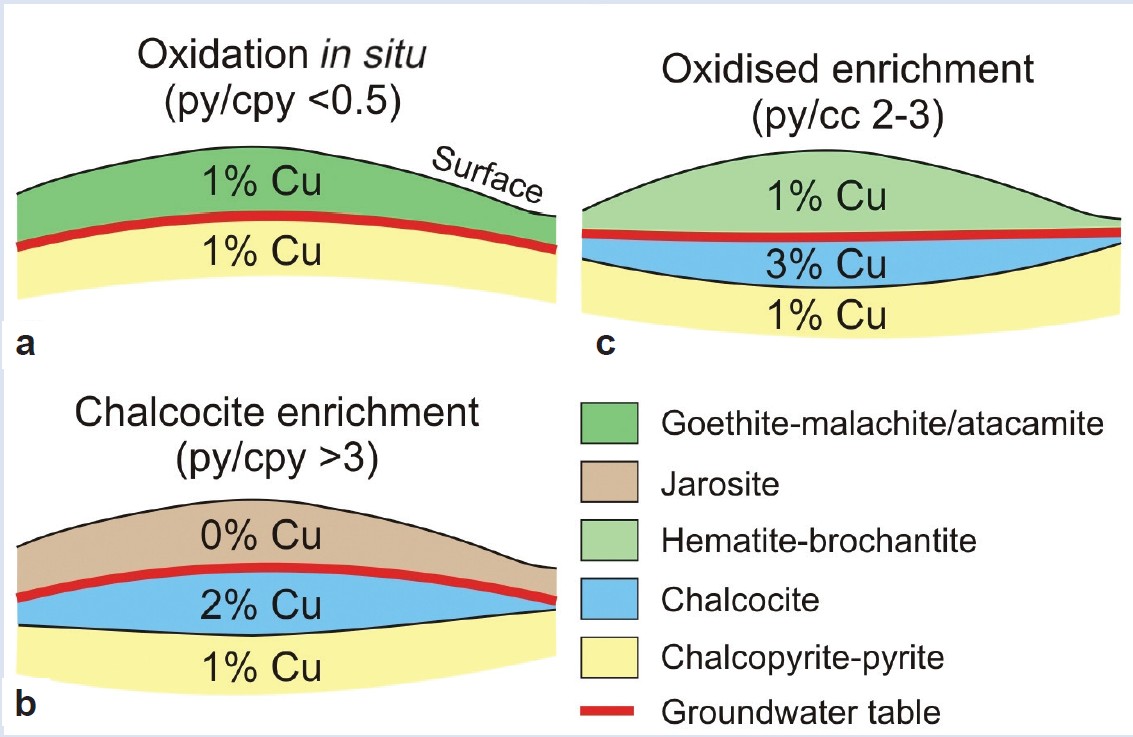
Some argue that its the supergene blanket deposits that made several of the largest copper mines in the world viable thanks to the boost in the payback time etc.
Combining The Current Targets
In my mind its not only about the fact that TK20 appears to have finally clipped a potentially big porphyry body which could very well be the massive prize and therefore a slam dunk company maker. I also try to account for the fact that there appears to be considerable potential for large skarn deposits as well as supergene enriched, chalcocite blankets.
#1 Skarn
- Holes TK8 & TK6 (assayed) showed that there is copper rich skarn mineralization over meaningful widths
- Holes TK15 and TK16 are suggesting that the magnetic skarn mineralization appears to have considerable strike/size potential
#2 Main Porphyry
Hole TK20 looks to have potentially clipped the guts of a very Molybdenum rich part of a large porphyry body
#3 Chalcocite
Hole TK18 looks to have encountered a new and oxidized which might have left behind a chalcocite copper deposit.
I asked Claude to help visualize the current exploration targets on the drill plan map (projected to surface):
(Claude rendered)
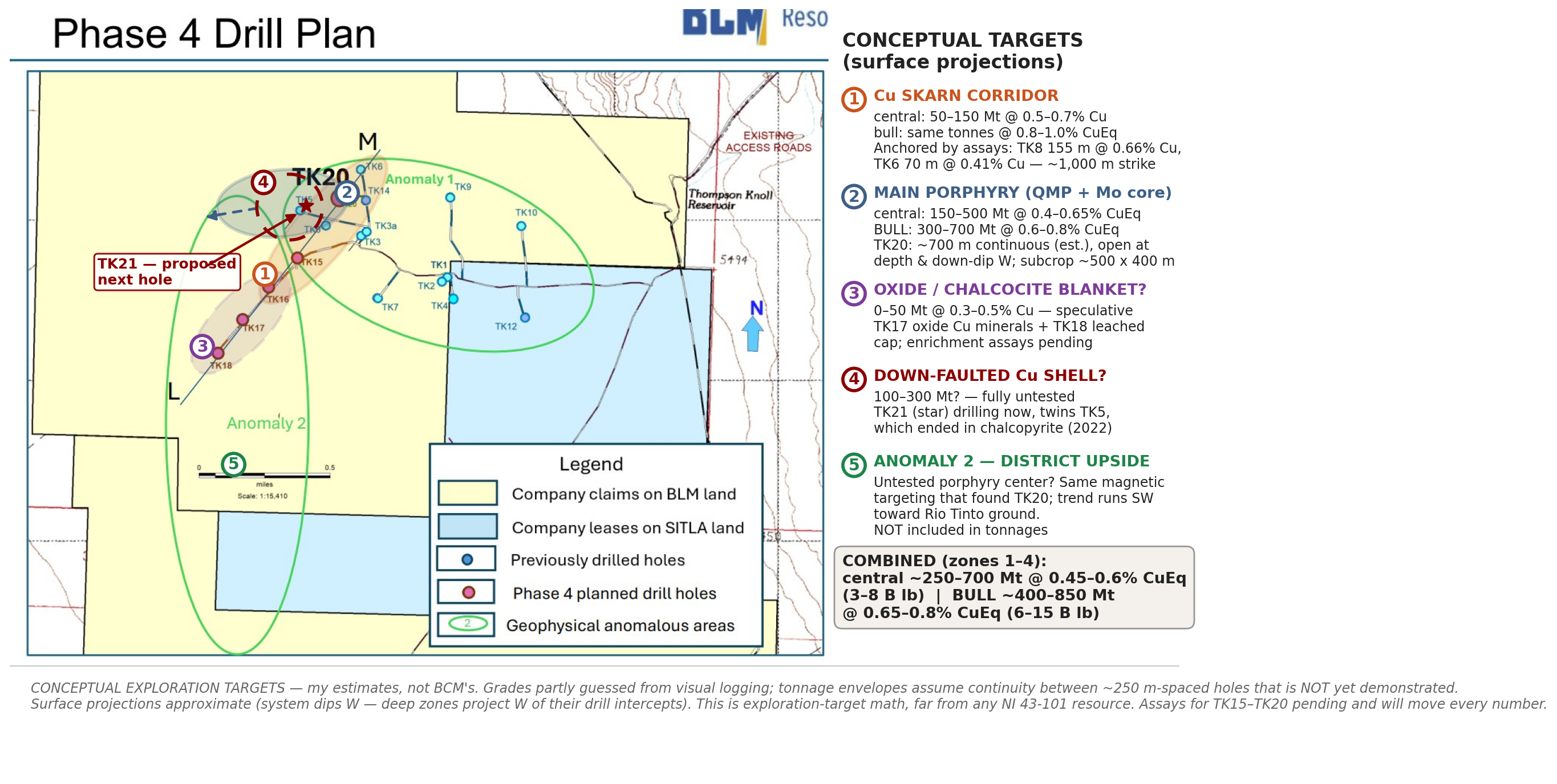
Note that Claude added exploration target tonnages and grades. These came out of my discussion with Claude and are highly speculative.
District Potential – South Porphyry Target
The slide below is a from a Crescat presentation where Quinton interviews Sergei done around 4 years ago:
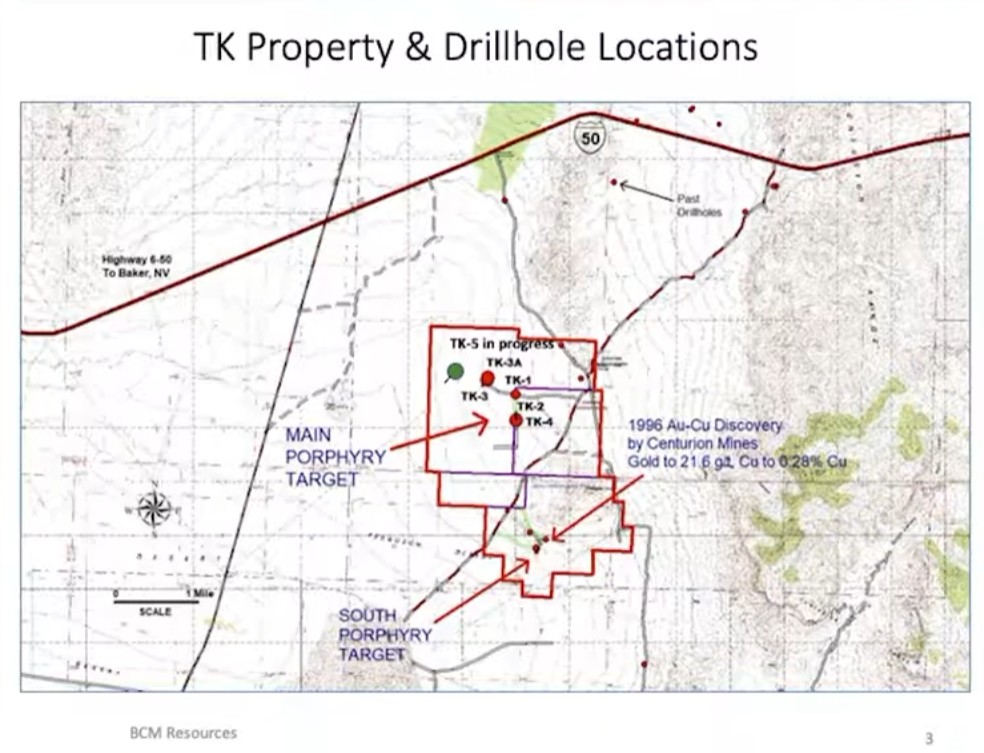
Note the “South Porphyry Target” and that Rio Tinto staked the following ground last year (Before any of the recent BCM holes were drilled but after hole TK8 etc were known):
(Rio Tinto claims in pink)
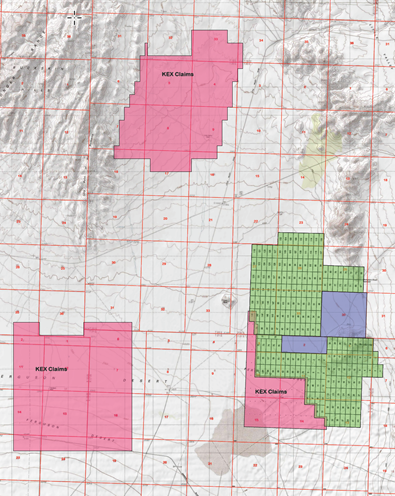
And not too long ago Rio Tinto quietly prepared drill pads within the claims that are an extension to BCM’s land package:
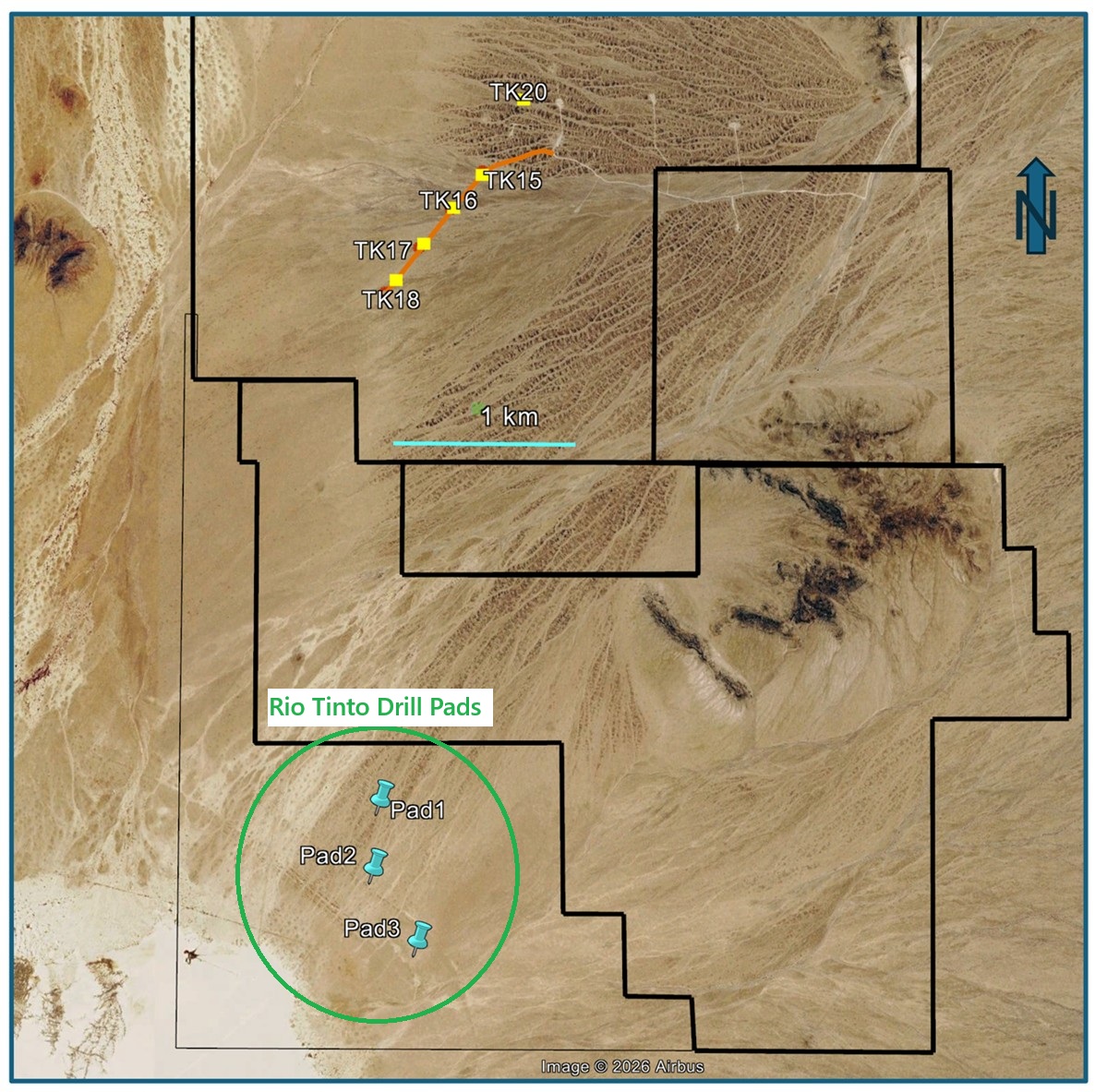
We do not know exactly what they are drilling for but it is somewhat along the trend of BCM’s recent drilling and quite close to BCM’s theorized southern porphyry target which I showed earlier. What we obviously can say is that it was BCM’s work and findings that prompted this staking and drilling so they must have liked what they were seeing in the BCM data room even before any of these recent holes like TK20 were even drilled.
Some time ago BCM already had put a drill plan together to test this southern target which included holes that stretched very closely to where TK18 discovered the uplifted oxidized porphyry rock and a conceptual chalcocite blanket:
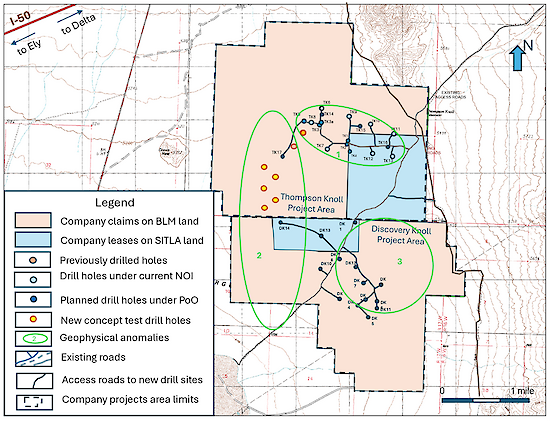
This was BCM’s description of this “Discovery Knoll” (“DK”) project area:
In addition, “B” is planning to begin Phase 1 and Phase 2 drill programs in the southern portion of the Property at the DK project. Phase 1 & 2 drilling at the DK project will test the southern portion of TKP for evidence of the porphyry system. Historical shallow RC drilling intercepted gold-copper mineralization at DK that assayed 9.15 meters of 0.234 oz/t (8.01 g/t) Au and 6.09 meters of 0.28% Cu, which may represent a separate porphyry system or an extension of the TK porphyry to the south.
Obviously “DK” is on the backburner right now given what is happening farther north but given the fact that this is an untested target, which Rio Tinto has decided to drill pretty close to, and that TK18 showed that there is porphyry rock trending southwards I think it is certainly reasonable to include this potential in the valuation of BCM as well.
Rio Tinto Considerations
Rio Tinto is the second largest mining company in the world with a Market Cap of C$230 Billion. Rio Tinto is also the owner of the giant Bingham Canyon mine in Utah which has an open pit operation that goes down 1.2 km and is the largest man made excavation in the world.
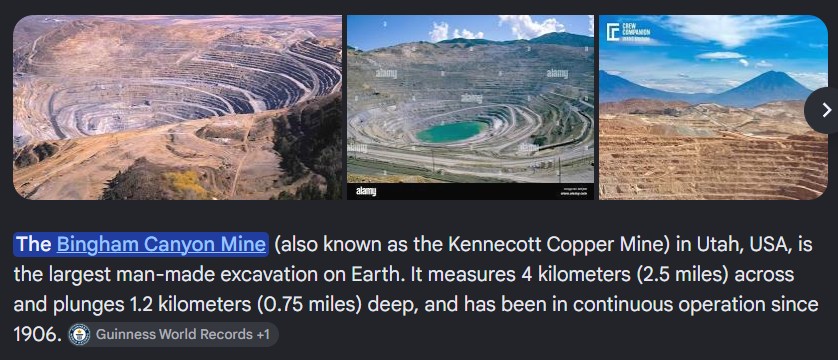
To get a sense of how big and deep this open pit is I asked ChatGPT to overlay it on one of BCM’s slides:
(ChatGPT rendered)
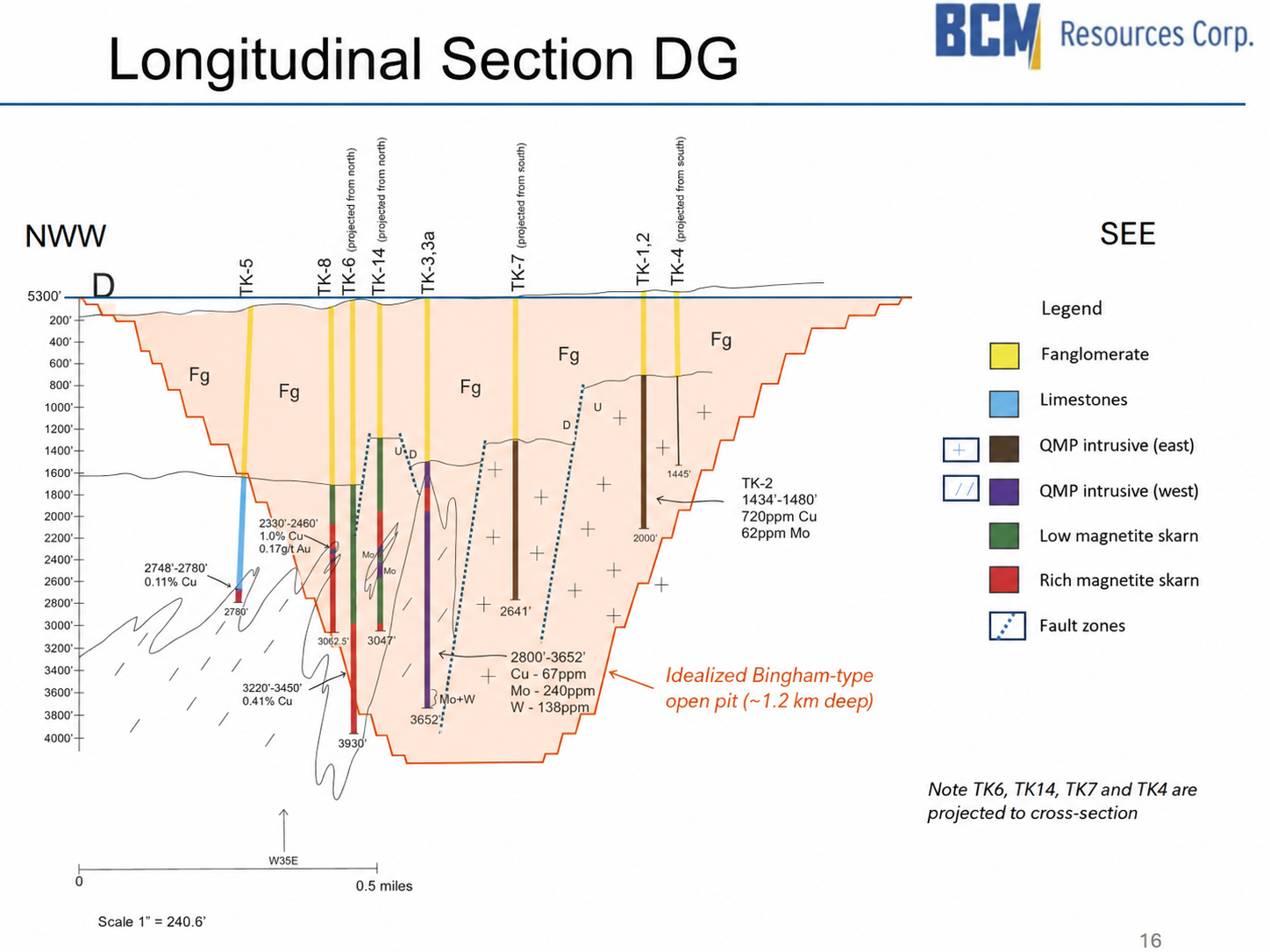
… Yes there have been thoughts aired from different people on the possibility to have another giant open pit here if things go well.
Blue Sky Potential
I was recently discussing the latest update from BCM with a very experienced geologist who is not involved with the company. He likes the story and I asked him “What do you think a Tier 1 porphyry discovery could fetch in price in Utah, USA?”
His response was: “Sky is the limit. That is the holy grail of discoveries. A tier 1 in the US or Australia.”
Filo Mining was acquired for C$4.1 B in 2024 when copper was priced at $4.0/lb. Copper sits at an ATH of $6.6/lb today which is around 60.9% higher than when Filo was acquired. And that’s a true Tier 1 discovery but it is also in an extremely remote location at ~5,000 m elevation up in the remote Andes mountains, split between two countries (Argentina & Chile), and is expected to need a ~365 km long water pipeline (which should cost a few billion dollars) from the coast of Chile to get built etc etc.
Lets ponder a composite Blue Sky case for the Thompson Knoll’s project. Meaning if most of what one can come with in terms of potential would materialize…
- Tier 1 porphyry(s) discovery at TK main
- Major skarn deposit(s) discovery
- Chalcocite blanket(s) discovery
- Multiple porphyries going from TK8, through TK18, and south to “Discovery Knolls”
- “Discovery Knoll” porphyry(s) discovery
… All in a flat, arid, uninhabited area of Utah, mainland USA in a time when US government has gone pro mining and is throwing money at the mining sector. Straddled by the second largest mining company on earth who happens to have a smelter and the world’s largest open pit mine which is nearing the end of its life in the region.
Success at Thompson Knoll ought to come with some of the highest premiums in the sector. Filo sold for C$4.1 B with some of the most difficult challenges (discounts) a Tier 1 discovery could possibly face. Consider the value add for giant mining projects in light of a more probable and shorter time to production.
Chart
The old saying of “The bigger the base, the higher in space” would suggest there could be a very impressive move after a 10-year long consolidation period:

Note: I own shares of BCM Resources so consider me highly biased. Always do your own due diligence and form your own opinions. Investing in junior miners can be very risky and never invest money you cannot afford to lose. This is not investing advice. I cannot guarantee the accuracy of the information in this article. I share neither your losses or your gains. Assume I might buy or sell shares at any time. I will not be able to hold anyone’s hands 24/7. This is a highly risky stock and I might lose money!
Best regards,
The Hedgeless Horseman